Bells, fans and the five colors: Decoding Korean shamanism in Disney+'s ‘Battle of Fates’
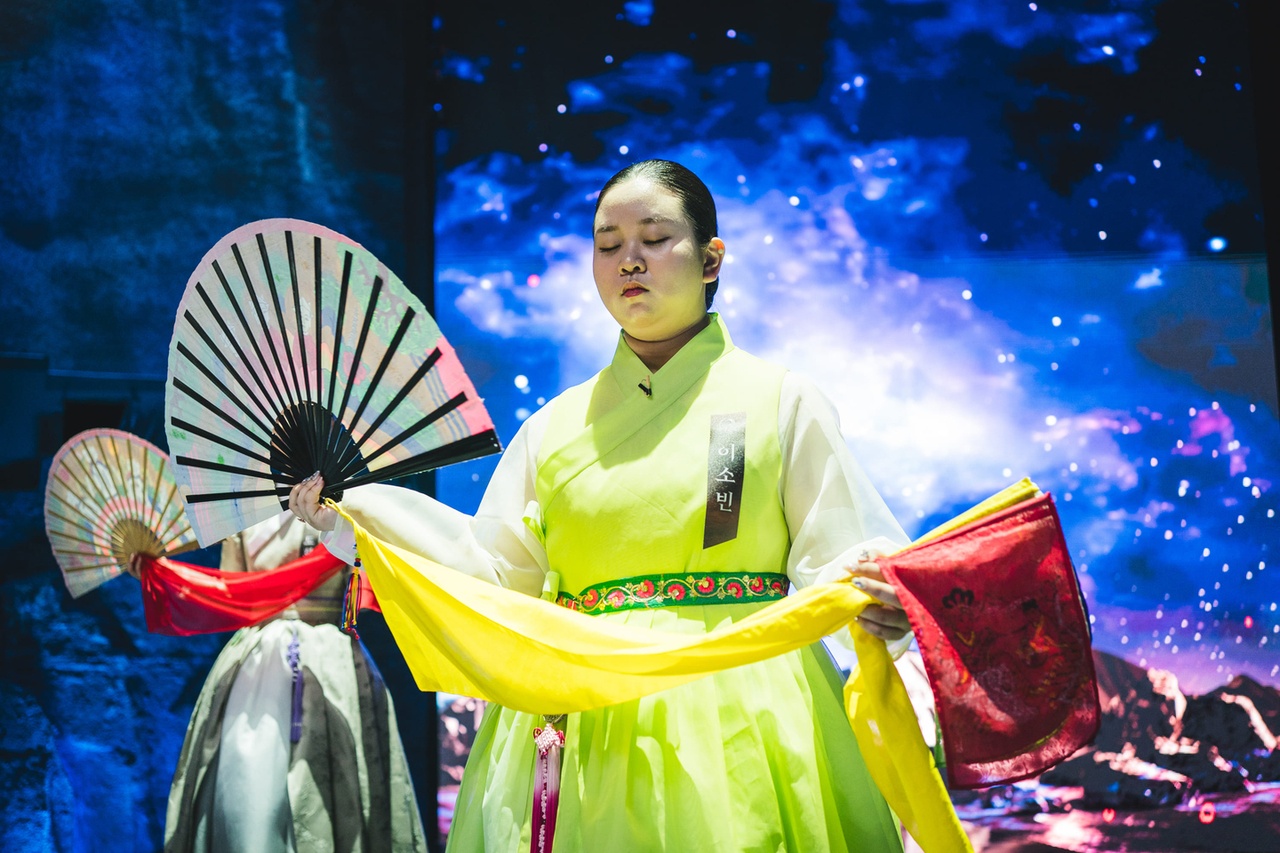
The colorful, vivid hanbok (traditional Korean attire), the rattling of bells, the waving of fans, five-colored flags and at times, a trembling body — all form part of how Korean shamans communicate with deities.
On the recent Disney+ fortunetelling survival show “Battle of Fates,” the most eye-catching participants are undoubtedly the shamans. Ranging from Korean saju (fortune-telling based on birth chart) readers to tarot masters, physiognomists and even foot readers, 49 seers on the show compete to prove who can best read one’s fate, all vying for a 100 million won ($69,500) prize.
Unlike other participants who rely on patterns and systems, shamans engage directly with the divine. As the first mission begins, the arena is overtaken by the sharp, rhythmic ringing of bells. One by one, shamans slowly wave their fans while shaking their bells as they attempt to reach the deities guiding them.
To international viewers, shamans communicating with their deities may seem unfamiliar, even though such scenes have been reinterpreted in Netflix’s hit animated film “KPop Demon Hunters” (2025), in which fictional girl group HUNTR/X, who are secretly shamans, hunt down evil demons and protect people through music and dance. But in Korea, these practices call back to a tradition that stretches back thousands of years.
The Korea JoongAng Daily has compiled some of the most recognizable elements of these practices, including their vivid costumes and ritual tools.
Colorful and vivid hanbok
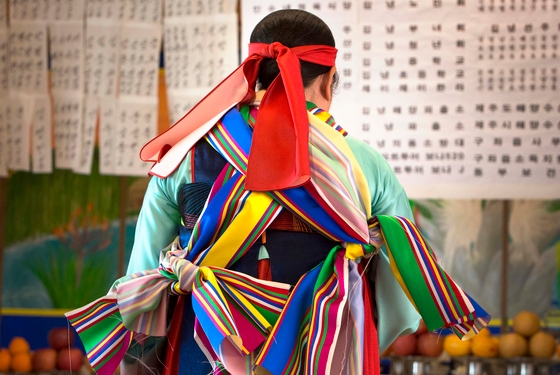
When Koreans think of a shaman, one of the first images that comes to mind is them dressed in vivid, colorful hanbok known as mubok, ritual garments worn during ceremonies. These hanbok-style costumes are believed to express respect toward the deities, while also reflecting longstanding tradition.
However, this may raise a question for international viewers: If shamans communicate with divine beings, why do they favor such bright, striking colors rather than the more subdued tones seen in some other cultures?
Part of the answer lies in the history of gut, traditional Korean shamanistic rituals. A gut was often performed in villages, where residents gathered to pray for good fortune and well-being. Accompanied by instruments such as the buk (barrel drum) and janggu (hourglass drum), these rituals frequently took on a festive, communal atmosphere. In keeping with this mood, shamans — as the central figures of the ritual — came to wear bright and vivid colors.
This, however, is only part of the explanation. The use of color is also closely tied to obangsaek, or traditional Korean color spectrum of red, blue, yellow, white and black, which is often used in Korean culture and rituals.
The five colors stem from the five elements theory, which explains the order of the universe. Each color corresponds to a direction: blue to the east, red to the south, yellow to the center, white to the west and black to the north.
Beyond direction, each color also carries symbolic meaning. Blue represents life, renewal and the attraction of good fortune. Red is believed to ward off evil spirits and embodies passion and purification. Yellow signifies balance, as well as wealth and health. White symbolizes purity and innocence and black conveys depth, silence and deep spiritual energy.
With each color having its own meaning, the colors of shamanic costumes are not fixed. As they serve as a medium for communicating with the gods — particularly during gut rituals — dominant colors may shift depending on the ritual’s purpose and the deities being called, such as white mubok worn during rituals for the dead.
Bells, fans and flags
One of the most striking scenes in “Battle of Fates” is when the shamans begin to rattle their bells and wave their fans — a signal that they are entering a state to communicate with their deities.
As explained in the show, shamans believe that their gods arrive through sound and wind. As such, the bells and fan serve as key mediums of communication.
The sound of bells is believed to purify the surrounding space, ward off negative energy and awaken the gods, allowing communication to take place. The bells are typically strung together in groups of three or more. It is also believed that the shaman’s hand shaking the bells is connected to the hands of their gods.
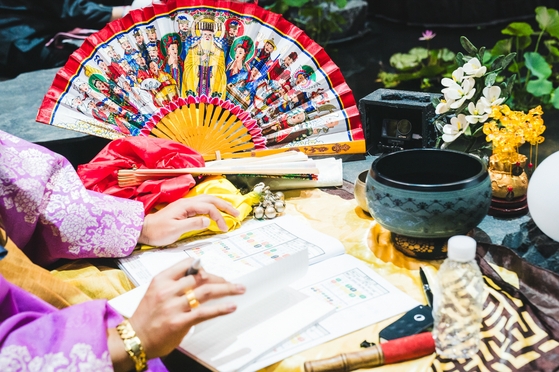
The vivid fans used by shamans often incorporate obangsaek. When a fan is waved, it is believed to channel the energy of the gods to humans, while dispelling negative forces and spreading good fortune. The fan also symbolizes the invisible force of wind, made visible through movement.
Opening a fan also represents the opening of fortune and the flow of energy, while folding it signifies blocked energy or relationships that must be released. The imagery painted on the fans is also carefully chosen, depending on the purpose of the ritual.
Another notable element seen in the show is the use of flags. Shamans are often shown selecting one or several flags from a bundle during fortune-telling. This bundle, known as obanggi, consists of five colors — red, white, blue, yellow and green. The flags are based on obangsaek, with green often used in place of black.
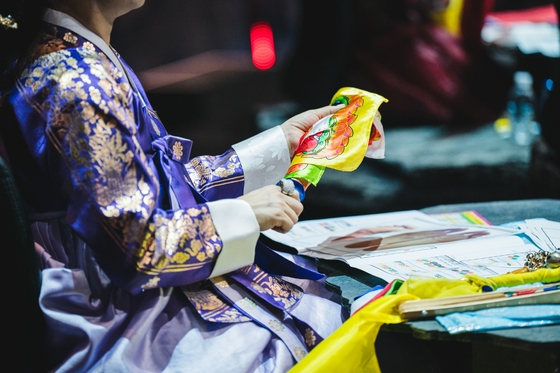
Each color carries its own symbolic meaning, which the shaman interprets in context. Generally, red and blue are considered positive signs, while green is associated as negative. Yellow and white are more ambiguous and are interpreted depending on the situation, with white sometimes regarded as stronger positive meaning than red.
This in particular came to light when shamans attempted to read the fate of a firefighter who died in the line of duty, a part of the show which later became controversial. During the segment, the shamans drew green flags, a signal interpreted as carrying negative meaning.
With its long history and deep roots in Korean culture, shamanism remains one of the country’s most distinctive traditions. Reflecting this enduring presence, many people continue to visit shamans, particularly around the New Year, but also as part of their everyday lives.
The interest appears to be extending to “Battle of Fates” participants as well. Young Master Jiseon, a shaman from the show, shared on Instagram on Feb. 25 that he is receiving an overwhelming number of booking requests.
BY KIM JI-YE [kim.jiye@joongang.co.kr]